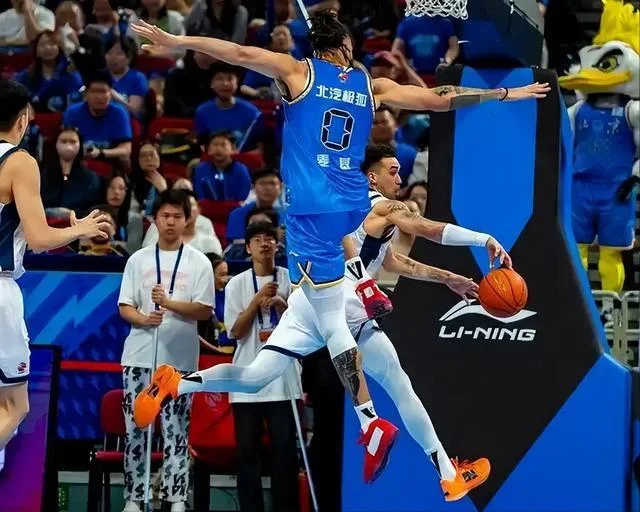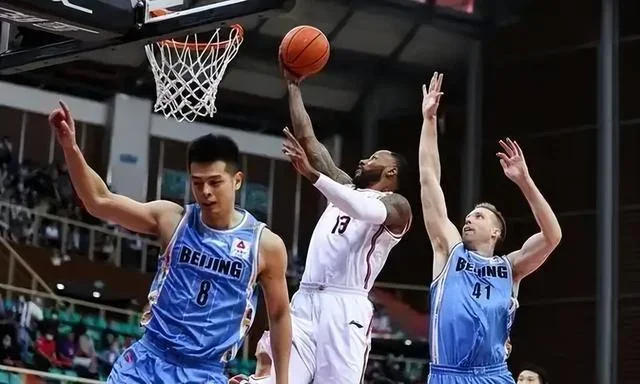

The 2025-2026 CBA playoff quarterfinal series between Guangdong and Beijing has captivated fans, with Game 2 delivering a dramatic overtime finish that saw Zhang Haojia sink a buzzer-beating three-pointer to seal a 102-99 victory for Guangdong. The game, which drew a viewership rating of over 2%, was packed with intensity, strategy, and subtle court etiquette details that played a pivotal role in the outcome.
After Beijing’s comfortable 102-94 win in Game 1, where their bench outscored Guangdong’s reserves 57-29, few expected such a fierce response from the home team in Dongguan. Beijing started strong, hitting nearly half of their three-point attempts in the first half, with dominant interior play from Zhou Qi and McGee. They led by nine points at halftime, but Guangdong’s guard Quinn erupted in the third quarter, nailing five three-pointers and scoring 21 points to erase the deficit. The game remained tight in the fourth quarter, with Beijing missing a chance to win in regulation, forcing overtime.
In overtime, Beijing head coach Jie Libin brought in McGee to exploit his height advantage, which led to Guangdong’s core guard Hu Mingxuan fouling out. However, McGee’s free-throw shooting faltered—he missed two crucial attempts. Then, in the final possession, Beijing failed to secure a defensive rebound, allowing Guangdong to grab an offensive board. Zhang Haojia caught the ball and released the three-pointer as time expired, igniting a wild celebration. The series is now tied 1-1, with Game 3 becoming a must-win for Beijing.
Beyond the box score, this game exposed several hidden aspects of court etiquette and league rules. For instance, CBA regulations strictly limit head coaches’ interaction with referees to dead-ball situations, and any excessive gestures or remarks can result in a technical foul. Guangdong coach Du Feng, though not penalized, lost valuable adjustment time due to brief discussions with officials. Defensive rotation also came under scrutiny: Beijing failed to adjust when Quinn caught fire, leaving him open to shoot five consecutive threes, shattering their game plan. Rebounding strategy in crunch time was another weakness; with the game on the line, Beijing deployed only McGee under the basket, while Guangdong crashed the boards with multiple players, directly leading to the game-winning offensive rebound and shot.
The CBA’s playoff format shifts also influenced the dynamics. This season uses a 3-3-5-7 structure, with the quarterfinals reduced to a best-of-three series. Beijing entered with a 2-1 home-court advantage as the fourth seed, and the league’s new 4-7 foreign player rule allowed both teams to utilize imports intensively. However, Beijing’s failure to execute in critical moments negated their advantages, highlighting how professional sports are often decided by the smallest details.
One standout performer was 20-year-old Zhang Haojia, whose buzzer-beater instantly made him a household name among Chinese basketball fans. Despite scoring only three points, his plus-minus rating of +12 led the team, reflecting his defensive impact and calm demeanor under pressure. The game also sparked discussion about career transitions for CBA players. Many former stars, like Du Feng (from Guangdong) and Stephon Marbury (from Beijing), have moved into coaching and management. Zhang’s mental fortitude and quick decision-making suggest he could follow a similar path if he continues to develop.
Looking ahead, Beijing still holds home-court advantage for Game 3. They must address their defensive lapses, improve free-throw accuracy, and ensure secure rebounding to stay alive. Meanwhile, Guangdong’s resilience and attention to detail have shifted momentum. The series mirrors the broader evolution of the CBA, where depth, execution, and nuance now outweigh individual star power.